Tag Archive: Monarch

Madame Monarch’s Journey Home…

Madame’s Journey Home is a sweet tale of a Monarch Butterfly’s journey. The vivid and delightful pictures, illustrated by the authors son, will reach out and touch your heart! This is wonderful book, an inspirational story of Love shared with the world…

From the Author, Mariosa: Madame’s Journey Home is a children’s book filled with a powerful message of love and transformation. It is a true story of a woman and her son that found a Monarch butterfly on the eve of a killing frost. They named her Madame. She lived with them for three months and became part of their community.

This is the story of an amazing journey and a very special circle of life.

Madame’s Journey Home is available through Amazon Books.

Let it Snow, Let it Snow, Let it Snow!

three snowflakes

It is not the strongest of the species that survives, nor the most intelligent, it is the one that is the most adaptable to change. – Charles Darwin

Anise Swallowtail Chrysalis

Survival of the Chrysalis...This Anise Swallowtail chrysalis will just have to hang with the cool weather until the spring rays return.

Bronze Copper Butterfly Egg

Mom laid this Bronze Copper butterfly egg safely nestled in some dried leaves, close to where its host plant will come up in the spring.

butterfly snowflake 2

When reflecting on butterflies, visions of warm sunshiny days may fill one’s mind. It is not usual to think of a butterfly and to also invoke images of such things as snow, sleet or sub-zero temperatures. Many species of butterflies, however, have had to, over time, consider, adapt to and survive such wintry conditions.

It is true that some butterflies, such as the well known Monarch, spread their wings and flutter south to escape Old Man Winter, but various others are not so flighty. Take, for example, the Bronze Copper, it withstands the cool weather as a wee little egg. Curled-up leaves, buried deep beneath the snow, create the ideal escape and lodging for caterpillars such as Tawny Emperors, Fritillaries, Crecents and Checkerspots.

Mourning Cloak Butterfly

Mourning Cloak butterflies need to find shelter in a wood pile or under some bark to survive the first frost.

Swallowtails, Sulphurs and Whites, bear the hardships of winter by hiding out and undergoing metamorphosis as a chrysalis. Red-Spotted Purples and other Admirals build their very own shelter, called a hibernaculum. This is a miniature abode made just for hibernating as its name suggests. Mourning Cloaks, Commas and Question Marks, face the wintertide as adult butterflies. They look for a place to safely hibernate, seeking such refuges as wood piles or tree bark.

Which ever way they do it, hats, scarves and mittens off to the amazingly adaptable butterflies who endure Jack Frost’s torment. Come springtime, I think I can speak for all, in saying how grateful we are for your tenacious and triumphant perseverance!

butterfly snowflake 2

Twany Emperor Caterpillar

A Tawny Emperor caterpillar searches for a cozy curled leaf where it can safely hibernate under a blanket of snow.

A Red-Spotted Purple caterpillar emerges from its self-made winter shelter or hibernaculum.

A Red-Spotted Purple caterpillar emerges from its self-made winter shelter or hibernaculum.

three snowflakes

butterflies sunflower snow

Above are photographs of the butterflies featured pictorially in this blog, going clockwise… Red Spotted Purple (Limenitis arthemis), Mourning Cloak (Nymphalis antiopa), Tawny Emperor (Asterocampa clyton), Bronze Copper (Lycaena hyllus) & Anise Swallowtail (Papilio zelicaon) at center.

Let it Snow, Let it Snow, Let it Snow!


Milkweed – Ensuring the Survival of Monarchs

Swamp Milkweed (Asclepias incarnata)

Swamp Milkweed (Asclepias incarnata)

Milkweed (Asclepias) is a natural wonder
- the host plant for the monarch and the queen butterflies.
Without milkweed, these butterflies would cease to exist.

Milkweed is also an important nectar source for butterflies, bees and other nectar seeking insects.

Narrowleaf Milkweed (Asclepias fascicularis)

Narrowleaf Milkweed (Asclepias fascicularis)

Milkweed gets its common name from the milky sap it secretes when you snap a leaf or break the stem. The milky substance contains cardenolides which are consumed by the feeding caterpillars and stored in the body of the adult butterfly making them toxic and bitter-tasting to potential predators.

California Milkweed (Asclepias californica)

California Milkweed (Asclepias californica)

This beautiful and important perennial belongs to the genus Asclepias.  There are over 150 species of Milkweed in the world with most of them being native to North America, South America, and southern regions of Africa.

Pictured is just a sampling of the colorful and diverse varieties of milkweed.

Silky Gold Tropical Milkweed (Asclepias curassavica)

Silky Gold Tropical Milkweed (Asclepias curassavica)

To ensure the survival of  Monarch Butterflies, be sure to plant plenty milkweed in your garden!

Milkweed photographes taken by Bobby Gendron, owner of Butterfly Encounters.

Butterfly Encounters offers over 20 species of milkweed seeds and provides detailed information about growing milkweed from seed.

Monarch Butterflies Overwinter in California

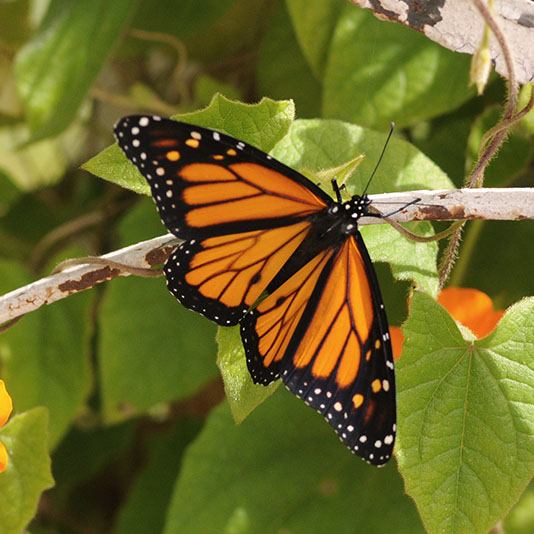
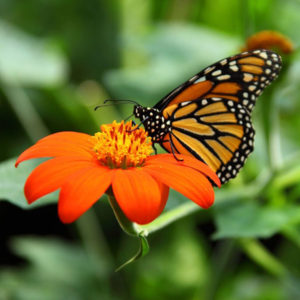
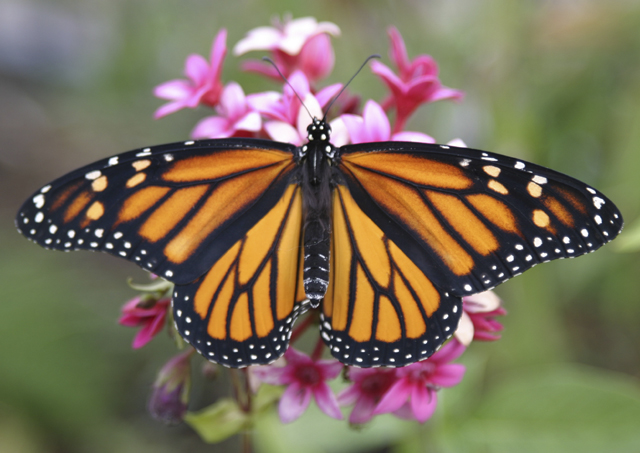
Female Monarch ButterflyMonarch Butterfly

Between the months of December and January some Monarch butterflies gather at over wintering sites along the coast of California. The Ellwood Butterfly Grove is among them. This is a magical place to visit during this special time!

Monarch Overwintering in Ellwood CA

Ellwood Butterfly Grove