Tag Archive: host plant

Smoking Swallowtails? Dutchman’s Pipevine Butterflies gone wild…

Pipevine Swallowtail (Battus philenor) on Pink Saliva

A male pipevine swallowtail attempts to flirt with a female as she lays her eggs...

I recently visited a grove where the Pipevine Swallowtail’s host plant, the Dutchman’s Pipevine, grew vigorously. Here, in this shaded and otherwise peaceful wood, there was a state of butterfly pandemonium happening.

Male butterflies zealously chased female butterflies hoping to strike up a romance. The maternally driven ladies ignored the amorous males advances, and instead, tirelessly their laid eggs.


Female Pipevine Butterflies Laying Eggs

Other winged chaps spent their time attempting to defend their precious territories. Boldly these fellows chased their counterparts about the treetops, creating flashes of brilliant blue which rivaled the skies above. Stoic females continued to cooly oviposit, again, dismissing out of wing, the males showy displays.

The forest was a frenzy of flutter! Everywhere I stood I was bombarded by the scuttle of a wing. It was courtship chaos where no basking perch, nectar blossom nor host tendril was safe!

Are these Pipevine Swallowtail ingesting their host plant or smoking it?

The pipevine butterflies exhibited crazed mating and reproductive behaviors, as if they had all gone wild with passion. In no other species have I observed the sexes acting out their respective roles in such a fervent manner.

Made me wonder for a moment, if these swallowtail caterpillars had actually smoked, instead of ingested their host plant, the Dutchman’s Pipevine?

This hardy vine does, after all, as it’s name suggests, resemble a Dutchman’s pipe. When in bloom it flaunts, amongst it’s green-hearted foliage, oddly shaped flowers which form in an appearance similar to that of a dutchman’s pipe.

Dutchman's Pipevine (Aristolochia gigantea)

Male Pipevine on Purple Penstemon

Whatever the motivation, pipes or genetics, what was going on in the grove that day was nothing short of spectacular to behold for the butterfly enthusiast. Pipevine swallowtails are indeed vibrant and entertaining creatures at every stage of their development.

Years ago, when less exotic planting choices where available at local nurseries, people commonly grew Dutchman’s Pipevine in their gardens. Often they used it to cover and adorn porches, arbors and fences. Pipevine swallowtails could then be found more frequently in populated areas, even in urban neighborhoods.

To ensure the survival of this species be sure to plant Dutchman’s Pipevine somewhere in your yard. Keep Mother Nature’s show going! Support her dramatic and colorful productions. Then just sit back under your vine shaded porch, sway gently on your swing and enjoy the show… and your Pipe?… vine too! KD

Male Pipevine on Yellow Yarrow

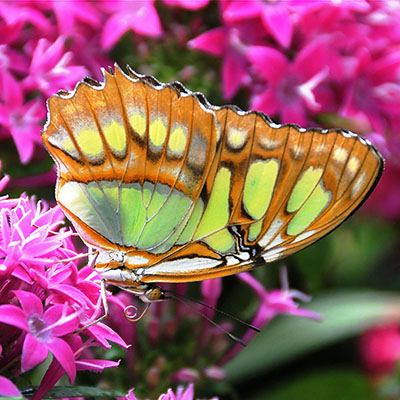
Click the  Pipevine’s Wing below to learn more about this swallowtail…

Pipevine Swallowtail Wing


I Saw A Little Butterfly…

I SAW A LITTLE BUTTERFLY

I saw a little butterfly flying atop.

I said, “Please, Mr. Butterfly, won’t you stop”.

He flapped his bright wings and had no word to say.

And before I could get near him, he fluttered away!


O’ Cassia Tree, O’ Cassia Tree…

christmas cassia cutChristmas Cassia w sulphur redwebbord

O’ Cassia Tree, O’ Cassia Tree, how lovely are your branches…

Where some female Sulphurs are concerned, the verse above should read, how lovely are your blossoms. The brilliant yellow buds found on a blooming Cassia plant, are number one on these gals’ Christmas lists.

Christmas Cassia (Cassia bicapsularis), a vigorous, evergreen winter bloomer, decorates itself in golden blossoms of sunshine for the holiday season. It, along with several others, such as Desert Cassia (Cassia polyphylla) and Candlestick Cassia (Senna alata) serve as hosts to a variety of Sulphurs (Colias), including the Cloudless (Phoebis sennae) and several species of Oranges and Yellows.

Although female Sulphurs will place their tiny offspring upon the green foliage of the Cassia plant, they much prefer to set their eggs down upon its tender buds. Here, a newly emerged caterpillar can climb into a safe sun colored burrow which will provide him with food and shelter.

christmas butterfly blogThe lovely saffron flowers showcased by Christmas Cassias and others alike, are not only cherished by the female butterflies, but by their young as well. Sulphur caterpillars prefer to feed on Cassia’s bright petals, mimicking their yellow color while doing so.

Then, like a Christmas miracle, when the favored florets are gone and the green foliage must be consumed, Sulphur caterpillars miraculously turn a verdant hue. And, almost as if attempting a keepsake, often they retain, in the form of a yellow stripe, just a hint of the flowers they so adored.

To learn and see more about Sulphur caterpillars click the flower bud found at the end of this blog.

O’ Cassia Tree, O’ Cassia Tree, how lovely are your blossoms!

Christmas Cassia in Bloom

Christmas Cassia in Bloom

christmas cassia cut2

Milkweed – Ensuring the Survival of Monarchs

Swamp Milkweed (Asclepias incarnata)

Swamp Milkweed (Asclepias incarnata)

Milkweed (Asclepias) is a natural wonder
- the host plant for the monarch and the queen butterflies.
Without milkweed, these butterflies would cease to exist.

Milkweed is also an important nectar source for butterflies, bees and other nectar seeking insects.

Narrowleaf Milkweed (Asclepias fascicularis)

Narrowleaf Milkweed (Asclepias fascicularis)

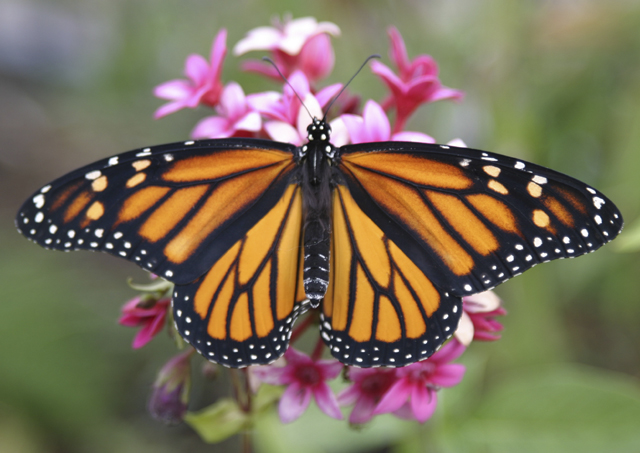
Milkweed gets its common name from the milky sap it secretes when you snap a leaf or break the stem. The milky substance contains cardenolides which are consumed by the feeding caterpillars and stored in the body of the adult butterfly making them toxic and bitter-tasting to potential predators.

California Milkweed (Asclepias californica)

California Milkweed (Asclepias californica)

This beautiful and important perennial belongs to the genus Asclepias.  There are over 150 species of Milkweed in the world with most of them being native to North America, South America, and southern regions of Africa.

Pictured is just a sampling of the colorful and diverse varieties of milkweed.

Silky Gold Tropical Milkweed (Asclepias curassavica)

Silky Gold Tropical Milkweed (Asclepias curassavica)

To ensure the survival of  Monarch Butterflies, be sure to plant plenty milkweed in your garden!

Milkweed photographes taken by Bobby Gendron, owner of Butterfly Encounters.

Butterfly Encounters offers over 20 species of milkweed seeds and provides detailed information about growing milkweed from seed.

History of The Endangered El Segundo Blue Butterfly

El Segundo Blue ButterflyIn 1927, a plane piloted by Charles Lindbergh and humorist Will Rogers landed on a dirt runway east of the El Segundo dunes.  The site was eventually chosen as the Los Angeles International Airport.

By the 1950′s a subdivision covered much of the El Segundo Blue habitat, right under the flight path of LAX airport.

In 1973, the president of the United States signed into law the Endangered Species Act (ESA), the world’s only legal prohibition against the extinction of other species, even those as small and localized as the El Segundo Blue butterfly.

In 1975, thanks to members of the conservation group, the Xerxes Society, Standard Oil Company agreed to fence off and manage their small portion of the El Segundo Blue habitat.  This was the first formal butterfly reserve in California.

In 1976, the El Segundo Blue (Euphilotes battoides allyni) was listed as protected under the Endangered Species Act.

In 1991 the Los Angeles City Council voted that two hundred acres of the dune system be permanently preserved.

El Segundo BlueThirty-three years after being classified an endangered species, the El Segundo Blue butterfly is flourishing once again on 200 acres of sand dunes near Los Angeles International Airport.

In 2009 the endangered El Segundo blue surprises scientists by rebounding and expanding its range in the South Bay.

The size of a thumbnail, the El Segundo Blue butterfly stays close to it’s host plant, Seacliff buckwheat (Eriogonum parvifolium), also called dune eriogonum or dune buckwheat.

Seacliff Buckwheat (Eriogonum parvifolium)Seacliff buckwheat is among the many buckwheat species we have in southern California.  Seacliff buckwheat is typically found on dunes and bluffs along the coastal communities from San Diego County up to Monterey County.  Like many other buckwheats, although its main blooming season is during the summer, some blooms may be observed at almost any time during the year ranging in color from a rosy pink to white and then to a deep coppery bronze when dry.

Plant some Seacliff Buckwheat in your garden today… More seacliff buckwheat would mean more El Segundo Blues!

Excerpts from one of my favorite books, An Obsession With Butterflies ~ Our Long Love Affair with a Singular Insect by Sharman Apt Russell
Photos and text excerpts the LA Times article “Reaching New Heights” July 30, 2009 ~ http://www.latimes.com
posted by Vickie

Recipe for Sunshine…

Ever wondered how to make sunshine? Mother Nature knows how!

Below is “her” recipe for the Cloudless Sulphur Butterfly…


Start with an itsy bitsy egg. Set it on the tenderest bud of a Cassia senna plant until it turns the color of sunshine.

cloudless cat tiny

Then watch closely as the egg comes to life and a tiny bright caterpillar emerges.

Let the little yellow guy munch away at the Cassia senna plant for as long as he likes.

cloudless caterpillars

Notice how he grows bigger and then begins to flaunt the green hues of his host plant.

He leaves just a touch a of his sunshine showing through in his stripe.

Now spy him turn curiously into the letter J.

And magically mimic a lovely leaf.

Then Voila, Out comes the Sunshine…

Enjoy!

Cloudless Sulphur Butterfly (Phoebis sennae)

Wow! A Western Tiger Swallowtail egg!!!

After years of searching… I finally found a Western Tiger Swallowtail egg!

western egg on wing

All fellow “butterfly egg hunters” out there should understand why a celebration of sorts is in order! Butterfly eggs in general can be hard to come by, especially when you are at the mercy of Mother Nature, but the Western Tiger Swallowtail’s eggs seem to be particularly, well, quite literally, out of reach.

Sycamores, Willows and Cottonwoods, the Western Tiger Swallowtail’s ( Papilio rutulus ) host plants, are not only typically abundant in source, but also grow large in structure. This makes the prospect of obtainng a Western Tiger’s egg nothing short of finding a needle in a very, very big haystack.

western tiger swallowtail

Desperate Times Call For Desperate Measures!

Western Tiger Swallowtails are common in the rural areas of Southern California. Often they can be seen fluttering high near the canopies of their favorite host plants, especially native  California Sycamores ( Platanus racemosa ). Other than reverting to my childhood days of tree dwelling, I can think of no other way to seek out and acquire a Tiger Swallowtail’s egg. Once, while driving, I noticed a Sycamore that had recently been struck down and was laying along the roadside. Admittedly, crazily, I pulled over my car and looked over the trees foliage for eggs, but, much to my disappointment, found none.

I don’t know if  Lady Luck decided to have a chat with Mother Nature or not, but for whatever reason, last week she finally resolved to shine upon me. My good friend and fellow confessed “butterfly egg hunter” actually spied a Western Tiger female laying eggs near her home. Next thing I knew the ladder was in my car and then I was high up in branches of several lush Sycamore trees searching the leaves for eggs.

Like many butterflies, I sought to camouflage myself by wearing earthy hued colors, such as green and brown. I also kept an over-sized hat on, hoping no one would recognize me and might instead mistake me for some over zealous gardener. I searched in the canopies for sometime, then just as I was about to fold up my wobbly ladder and go home I found what I had been hunting for.

Wow!!!… Finally, a Western Tiger Swallowtail egg!!!! It was just sitting there topside, upon a sizable leaf, perfectly disguised amongst the spotted patterns typical of the Sycamore. I had always thought that female butterflies preferred to lay their eggs on the soft new growth of their host plant, but not in this case.

Here, mama clearly opted for the covert over cushy and also, possibly due to her size, choose to lay the egg at the base of a considerable leaf which could sustain her body weight. Whatever the circumstances, I was glad to have found the egg! I am hoping to watch the caterpillar which emerges from it go through full metamorphosis, but am most looking forward to seeing it fly off as a lovely swallowtail butterfly into the canopies from which it came. -K.D’Angelo

The Pygmies…

Tremendous beauty can be found in the tiniest of things… for who has ever thought to rival that of a butterfly’s wing.. ©K. D’Angelo

Western Pygmy Blues

western pygmy 5western pygmy 4

With a wingspan measuring just under a half of an inch (1.2-2 cm) the Western Pygmy-Blue (Brephidium exilis) is the smallest butterfly known in North America. Western Pygmy-Blues are not primarily blue in color, as their name suggests, but are instead varying shades of a lovely iridescent hue. Western Pygmy-Blues typically have coppery brown/blue dorsal wings, which shade to a brown ventral wing showing white dashes.

western pygmy 2

Western Pygmies also have four black dots near the base of the ventral hindwings and flaunt an arc of black silvery metallic dots along their far edge. These butterflies are also typically narrow to broadly fringed. Adults enjoy a variety of flower nectar, while caterpillars feed on host plants such as Saltbush (Atriplex) from the Goosefoot Family (Chenopodiaceae).

western pygmywestern pygmy 3

Although, these butterflies are little, indeed, I think all who come across them will agree, they are tiny treasures upon wing. KD