Tag Archive: butterfly

Breezes of Spring

Butterfly Poetry Breezes of Spring

Breezes of Spring

Sweet life is borne on Breezes of Spring
A tiny new bud, an egg left by wing…

Caterpillar and flower frolic happily together
With raindrops and rays amidst clement weather

Scarlet-gold leaves herald in changing light
Turning friends to chrysalis n’ seed at Nature’s delight

Creation finds rest in a white winter’s slumber
Silent snow cradles the awaiting season’s wonder

Out of the morning’s dew a yearning sprout does appear
Beholding a familiar winged dancer spying it’s tear

“Oh, bright little blossom, why do you cry?”
“Can you not see I’ve become a butterfly?”

Sweet life is borne on Breezes of Spring
A tiny new bud, an egg left by wing…

˜K. D’Angelo

Lookin’ For Love in All The Wrong Species… Of Milkweeds and Monarchs

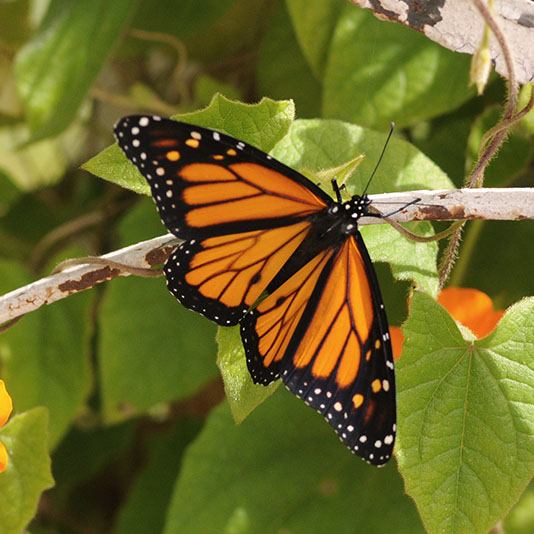
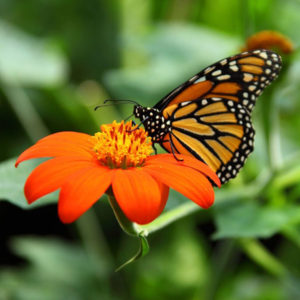
I took a stroll through a local nature reserve and found myself being courted by this handsome male monarch.

At first he seemed like the shy and lonely type, as he circled me from afar, drifting alone on the quiet afternoon breeze.

Pink n’ plush Indian Milkweed helped set the mood, softening the landscape with billows of sweet and creamy cotton candy blossoms.

Gathering his courage the brave king of the butterflies flew in closer, alighting upon a lovely coneflower. He spread his wings and basked proudly, as if to eclipse it’s beauty.

This was such a majestic display and there may have even been a little romance, had I been a female monarch! Sorry fella. Thanks for the memories, but you had better fly off now and look for love in some other faces, starting with your own species! KD

Ascelias eriocarpa is a species of milkweed known by the common names of Woollypod Milkweed, Indian Milkweed and Kotolo. It is native to California and adjacent parts of Neveda and Baja California. It grows in many habitat types but thrives in sunny, dry areas. The female Monarch Butterfly (Danaus plexippus) uses this plant as a host and the males of this species can often be found fluttering around it “looking for love”…

Bugs ‘N Butterflies Event at Riley Wildernes Park

Join Obsession With Butterflies under the oak trees as entomologists and other enthusiasts share their knowledge of bugs and butterflies at the annual “BUGS ‘N BUTTERFLIES” event at Riley Wilderness Park on Sunday, June 6th 2010.

Meet Brent Karner from the LA Museum of Natural History, along with his  “Insect Zoo”. Brent will be demonstrating interesting insect and lifestyles.

Vendors include:

Gardening specialists will discuss planting California native drought tolerant plants to attract pollinators like butterflies, bees and hummingbirds.

Enjoy guided Ranger-led as well as self-guided Nature Walks, the Riley Park Butterfly Garden, a “Hawk Talk”, Nature Center, Kid’s activities and Crafts which will be offered throughout the day.

Its a fun day for the whole family!

Event Fee: Free with parking
Parking Fee: $3.00

Thomas F. Riley Wilderness Park Map Quest
30952 Oso Parkway
Coto de Caza, CA 92679
949-923-2265 or (949)923-2266

Mary Lou Heard Memorial Garden Tour 2010

Tour 39 of Orange County’s  most incredible gardens in full bloom, May 1st and May 2nd from 10:00am to 5:p00 pm

orange county garden tour

Mary Lou Heard Memorial Garden Tour

Each of these gardeners has generously consented to share their passion for gardening with us and I urge you to attend as many of the gardens on the tour as you can.

bleeding heart

Bleeding Heart

A bit of history about the Mary Lou Heard: In 1985, Mary Lou Heard opened Heard’s Country Garden Nursery, a magical nursery tucked away on a seldom traveled road in Westminster, California. The gardens were full of unique and often old fashioned annuals and perennials such as “Kiss Me Over the Garden Gate”, “Bleeding Heart” and “Four O’Clocks”. These, along with whimsical garden art, English and old garden roses, scented geraniums, herbs, vines and small trees made the nursery a delightful and special place to visit. In the center of the pebble-dusted paths was a small quaint old wooden “cottage” filled with gifts, books, potpourris and small bags of the finest organic fertilizers available. In the far back of the garden was another old wooden building, it too, filled with antiques, gifts and more home décor….it was for me, a gardeners’ shabby chic shopping heaven.

In 1993 Mary Lou came up with the notion of a garden tour, “real gardens by real people”. This is a self-guided tour, where you drive from home to home at your leisure to view the gardens.  The Heard’s Garden Tour was an instant success, bringing in over 800 garden lovers the first year and in later years, drawing in thousands of visitors. In 2000 Mary Lou Heard was diagnosed with cancer and two years later she would close her beloved nursery, and in her final Heard’s Country Garden Newsletter she wrote. “Though there are still many more gardens in my heat that have to be planted – the body is calling for a rest. Saying good-bye is the hardest thing I have had to do.”

The annual garden tour continues today, thanks to the Mary Lou Heard Foundation.

Anise Swallowtail Caterpillar

Anise Swallowtail Caterpillar Munching on Fennel

For those of us who had the pleasure of knowing Mary Lou Heard, this memorial garden tour holds a special place in our hearts. And for me, it’s especially significant, because it was at Heards Country Gardens Nursery, where I found my passion, butterfly gardening! Immediately upon attending a butterfly gardening class at the nursery, I was forever obsessed with butterflies. I was so fascinated with every detail of the butterfly class, taking notes and asking questions, that I could hardly wait to get home and start “gardening for the benefit of butterflies” myself. I especially remembered waiting in line to purchase a chrysalis from the teacher, Cathy, the “Butterfly Lady”, but to my disappointment, by the time I made my way to the front of the line, Cathy was out of butterfly chrysalises. She did however have a couple of caterpillars, and upon assuring her I was growing pesticide free fennel in my garden, she sold me one of her Anise Swallowtail caterpillars. I ever so carefully took it home, fed it, fretted over it, until finally that memorable day came when my Anise Swallowtail Butterfly emerged from it’s chrysalis, I knew I was hooked.

butterfly garden

Wood’s Wildlife Wonder

This story brings me to tell you about one of the gardens on the Mary Lou Heard Memorial Garden Tour, it’s at the home of Helen and Ken Wood. The “Wood’s Wildlife Wonder” is filled with plants and trees selected to attract butterflies and hummingbirds. Helen is a master gardener, her garden is certified as a  North American Butterfly Association certified butterfly garden, Monarch Way-station and Native Habitat. Last summer I had the pleasure of attending a “butterfly tea” at her home and was amazed at the number of butterflies visiting her garden. If you live in the Orange County area, I urge you to take the Heard’s Garden Tour, and don’t miss stopping by the Woods Garden, I’m sure Helen would be happy to talk to your about butterfly gardening. Be sure to bring your camera!

Mary Lou introduced me to the world of butterfly gardening,  I hope to inspire others to take the tour and begin gardening for the benefit of butterflies. ~Vickie

For a list of gardens on the 2010 tour, visit heardsgardentour.com

Sharing Butterfly Blogs…

Spring is in the air and we are starting to spy butterflies dancing on petals, sipping fine nectar and basking in the warm sunshine.  We would love to see some of the butterflies that have landed on your blogs.  Drop us a comment and be sure include a link to your favorite butterfly inspired blog.

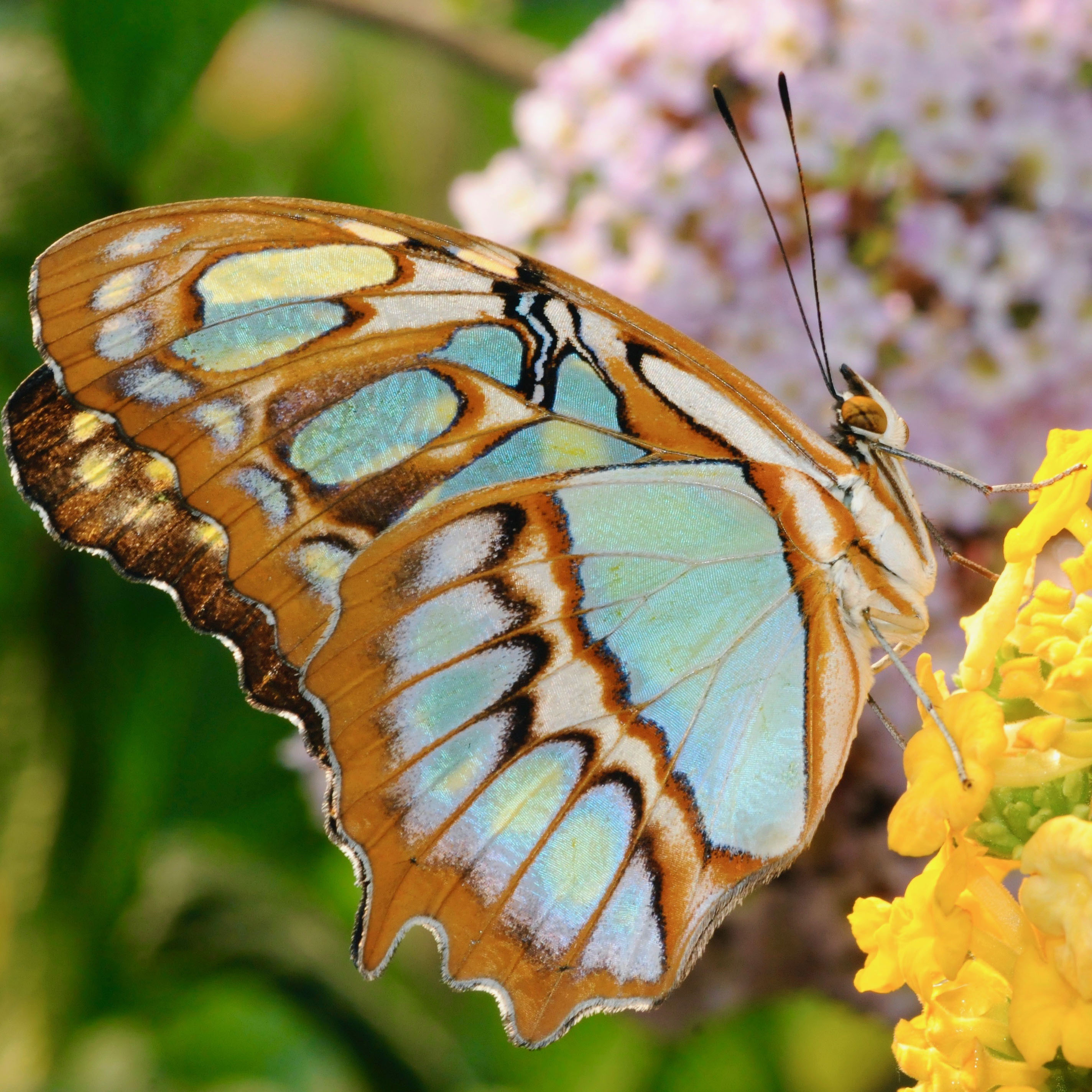
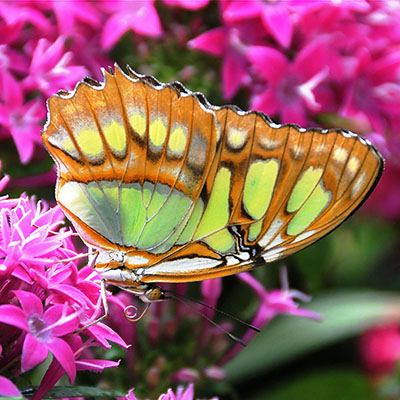
Malachite Butterfly on Lantana

To include your butterfly related web site’s link on our OWB Links and Resource Page, we kindly ask you provide a reciprocal link to either our website or blog.

OWB Website:  http://www.obsessionwithbutterflies.com
or
OWB Flutter-Blog
:  http://www.obsessionwithbutterflies.com/blog/
or
OWB Butterfly Gift Shop:
http://www.obsessionwithbutterflies.com/shop/

Once you’ve linked to our website or blog, submit your link to our links page. We’ll usually get your link up within 24 hours!

I Saw A Little Butterfly…

I SAW A LITTLE BUTTERFLY

I saw a little butterfly flying atop.

I said, “Please, Mr. Butterfly, won’t you stop”.

He flapped his bright wings and had no word to say.

And before I could get near him, he fluttered away!


Ten Facts About Monarch Butterflies Everyone Should Know

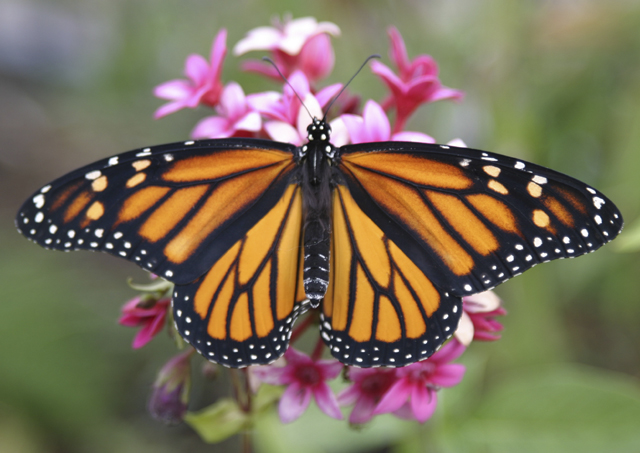
Female Monarch Butterfly on Pentas

MONARCH BUTTERFLY: TOP TEN FACTS

#1 MIGRATION

Hundreds of millions of monarch butterflies migrate from eastern North America to Mexico each fall to overwinter in the high elevation oyamel fir forests of the Transvolcanic Range of central Mexico. Monarchs are unable to survive freezing temperatures and those breeding in temperate regions must escape to moderate climates to reproduce the next season.

#2 GENERATIONS

Most of the monarchs joining the migration each fall are 3-4 generations removed from those that made the journey the previous year.

#3 TIME AND DISTANCE

The migration begins in mid August in the north and in September at mid latitudes. The migration progresses at a pace of 25-30 miles per day, although individual butterflies often fly further during periods when conditions are favorable. Most monarchs originate from locations more than 1500 linear miles from the overwintering sites. The duration of the migration appears to be 2-2.5 months.

#4 RECOLONIZATION OF THE SUMMER BREEDING AREAS

The monarch breeding areas in eastern North America are recolonized by two generations of monarchs; the overwintering butterflies that move north in the spring and their offspring. The latter reach maturity and begin flying N/NE in late April, reaching the northern limits of milkweeds by mid-June.

#5 LONGEVITY

Migratory monarchs that survive the winter in Mexico are 8-9 months of age and may be the longest lived of all butterflies. In contrast, reproductive monarchs breeding during the summer months only live 2-5 weeks due to the high cost of reproduction.

#6 NUMBERS

Monarch populations are measured as the number of hectares (1 hectare = 2.47 acres) of trees occupied by clustering butterflies in mid-December of each year. The size of the population has varied from 2.19 to 18.2 hectares over the last two decades; averaging close to 9 hectares in the 90s and between 5-6 hectares in this decade.

#7 NAVIGATION

Migrating monarchs in the interior of the continent fly in directions that seem to be geographically appropriate given the need to reach Mexico. How the butterfly determines these directions is the unanswered navigation question. Components of the navigational system that are known involve a time-compensated sun compass linked to the circadian clock, and a protein (Cry1) that is sensitive to blue light and ultraviolet wavelengths.

#8 TAGGING

Tagging by Monarch Watch volunteers has helped define the migration window as well as the timing and pace of the migration. Tagging also shows that the probability of reaching Mexico is related to geographic location, size of the butterfly, and the date (particularly as this relates to the migration window for a given location).

#9 DIMINISHING RESOURCES: THREATS TO THE MONARCH MIGRATION

During the breeding season monarchs require milkweed plants upon which to rear their larvae and nectar sources to sustain the adults during reproduction. Nectar sources are also required by the butterflies to fuel the fall migration to Mexico as well as the spring flights northward. Overwintering monarchs require shelter and water. All of these resources are diminishing. Deforestation at the overwintering sites in Mexico has eliminated a number of former colony sites and others have been badly degraded so as to reduce the shelter and water available to wintering butterflies. In the United States, 6000 acres are converted to development each day, eliminating milkweeds needed by monarch larvae and nectar sources required by adult monarchs. Chemically intensive agriculture and roadside management by excessive mowing and use of herbicides have also eliminated monarchs and their milkweed hosts. Lower numbers of overwintering monarchs in this decade may be related, at least in part, to habitat loss.

#10 CONSERVATION

Sustaining the monarch migration will require the cooperation of all three countries (U.S.A., Canada, Mexico) that are home to monarchs for some portion of the year. Future efforts will be based on the “North American Monarch Conservation Plan” – a program that advocates the implementation of measures to enhance, restore, and protect monarch habitats.

Thanks to Dr. Orley R. “Chip” Taylor, Director of Monarch Watch www.monarchwatch.org

The Flying Irish… Butterflies?


Leprechauns love butterflies because they flaunt every color of the rainbow. Some real butterflies are even green, such as the Malachite, Olivewing and Paris Peacock pictured below, but I seriously doubt whether they could be Irish too!

Never trust a Leprechaun, but do visit our Kid’s Craft Page, where you can download butterfly coloring pages for free! May the road rise to meet you and the butterflies always be at your side… Happy St. Patrick’s Day from OWB!