Category Archives: Butterfly Photography

A Drive-Thru Nature…

Burger, Fries & Some Nature Please…

Fast Food Joint

Hold The Mayo, Extra Butterflies!


Tiger Swallowtail on Plumbago

You don’t have to go far to experience the wonders of Nature, because, whether you notice them or not, they surround you everyday! I was reminded of this recently as I frequented one of my favorite fast food joints.

While sitting in the drive-thru, dreaming of french fries, I noticed a delicate tiger swallowtail sailing by. She glided carefreely past me and landed somewhere within a large patch of Plumbago.

Plumbago Blossoms

As I watched the swallowtail disappear into the foliage, the sweet n’salty fantasy of fries drifted from my mind and I began to think about where the butterfly had flown off to. What other creatures might be found hidden amongst the sapphire hues of the Plumbago plant?

Male Marine Blue

I mused over how many times I had sat in this same line, driven past this delightful spot, which was teeming with butterflies and other winged creatures, and had not even noticed it. Did others, who idled here, waiting to order their burgers and such, ever see it, I wondered?

With curiosity driving me, I cruised the drive-thru, parked my car, ate lunch, grabbed my camera and proceed to climb down a small slope to a spot where I could further explore this newly discovered smorgasbord of Nature. I was not to be disappointed!

Lady Bug

Waves of Marine Blues swirled about on afternoon breezes mimicking ocean currents. Opalescent n’ indigo males moved with soft n’ fair females. A Violet Dancer cut in. Blue-gray blossoms of Plumbago complemented the performers charming display of ebb and flow.

Violet Dancer Damselfly

A youthful praying mantis played camouflage with me. He turned his mysterious gaze my way for just a moment then vanished back into the verdant jungle from which he came.

Fiery Skippers quenched their thirst with candied nectar from cool blooms. The blazing red lady bugs who appeared failed to alarm them. Itty bitty Marine Blue caterpillars munched away at sea-colored petals as if to pay tribute to their namesake and an alabaster butterfly floated in like a tide of innocence.

Female Marine Blue

What appetite could not have been satisfied here, in Nature, where such a feast of diverse beauty was being offered? Having my fill and feeling most content, I began to head back up the hill towards my car, when one more irresistible course was served.

Tiger Swallowtail Butterfly

Out from the meandering Plumbago arose the lovely swallowtail that had first caught my eye. She gracefully circled, then set down briefly upon a branch to rest.  As she affably perched, revealing her magnificent wings, I could not help but think of how she was reflecting back to me the delicious banquet of creation I had just been blessed enough to enjoy.   KD <

Young Praying Mantis

Skipper Sipping Nectar

Marine Blue Caterpillar

White on Plumbago

Big Mac,

Filet-O-Fish,

Quarter Pounder,

French Fries,  Icy Coke,

Thick Shakes,  Sundays &

Apple Pies….

Hmmm.. think I will take “Nature” the healthy choice instead!

Click the fast food clipart to learn more about California’s Butterflies,

(including Marine Blues) and download informational PDFs for free.

Bon Appetite from OWB!


Enter The Lepidoptera Zone….

You unlock this door with the key of imagination…

(be sure to click on all images for a full view)

Beyond it is another dimension… a dimension of color, a dimension of flight, a dimension of wings.

You’re moving into a land of both butterflies and moths, of scales and eyespots.

You’ve just crossed over into The Lepidoptera Zone…


>>>


Lookin’ For Love in All The Wrong Species… Of Milkweeds and Monarchs

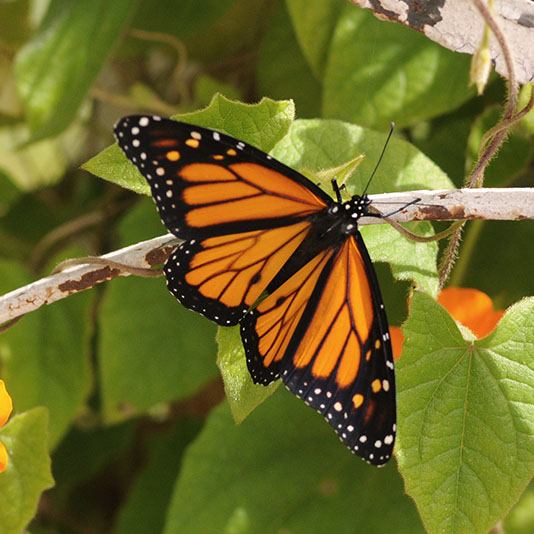
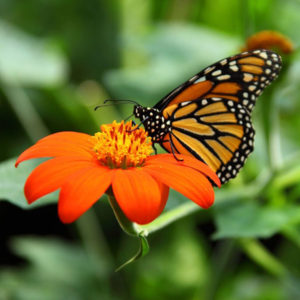
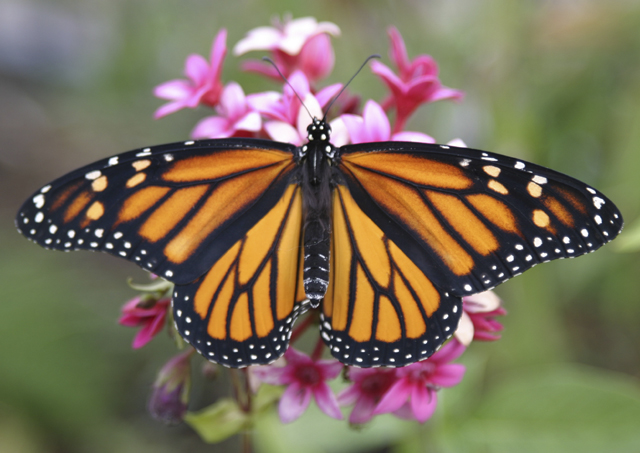
I took a stroll through a local nature reserve and found myself being courted by this handsome male monarch.

At first he seemed like the shy and lonely type, as he circled me from afar, drifting alone on the quiet afternoon breeze.

Pink n’ plush Indian Milkweed helped set the mood, softening the landscape with billows of sweet and creamy cotton candy blossoms.

Gathering his courage the brave king of the butterflies flew in closer, alighting upon a lovely coneflower. He spread his wings and basked proudly, as if to eclipse it’s beauty.

This was such a majestic display and there may have even been a little romance, had I been a female monarch! Sorry fella. Thanks for the memories, but you had better fly off now and look for love in some other faces, starting with your own species! KD

Ascelias eriocarpa is a species of milkweed known by the common names of Woollypod Milkweed, Indian Milkweed and Kotolo. It is native to California and adjacent parts of Neveda and Baja California. It grows in many habitat types but thrives in sunny, dry areas. The female Monarch Butterfly (Danaus plexippus) uses this plant as a host and the males of this species can often be found fluttering around it “looking for love”…

Can I touch a Butterfly’s Wing?

If you’ve ever handled a butterfly, you probably noticed the powdery residue left behind on your fingers. A butterfly’s wings are covered with scales, which may rub off on your fingers when you touch them. That’s the powder you see on your fingers. But will this prevent the butterfly from flying? Will the butterfly die?

This is more fiction than fact. The truth is, a butterfly sheds scales throughout its lifetime. Butterflies lose scales just by doing the things butterflies do – nectaring on plants, mating, flying and evading predators. If you touch a butterfly gently, it will lose some scales, but rarely enough to stop it from flying.

A butterfly wing is made of a thin membrane webbed with veins. Colorful scales cover the membrane, overlapping like roof shingles. The scales strengthen and stabilize the wings. If a butterfly loses a lot of scales, the underlying membrane may become more prone to tears, and that could affect its ability to fly.

A butterfly cannot regenerate lost scales. On older butterflies, you may notice tiny clear patches on their wings, where scales were shed. If a large section of scales are missing, you can actually see right through the clear membrane of the wing.

Wing tears, on the other hand, will definitely affect the butterfly’s ability to fly. You should always try to minimize tears to a butterfly’s wing when catching them. Never trap a live butterfly in a small jar or other container, where it may damage its wings by flapping against the hard sides. Always use a proper butterfly net.

When you handle a butterfly, gently close its wings together. Using a light but firm touch, hold all four wings together, and keep your fingers in one place. It’s best to hold the wings at a point close to the butterfly’s body, to keep it as still as possible.

As long as you are gentle and don’t handle a butterfly excessively, it will continue to fly free when you release it.

To learn more about Butterfly Scales visit OWB’s Butterfly Dimension page…

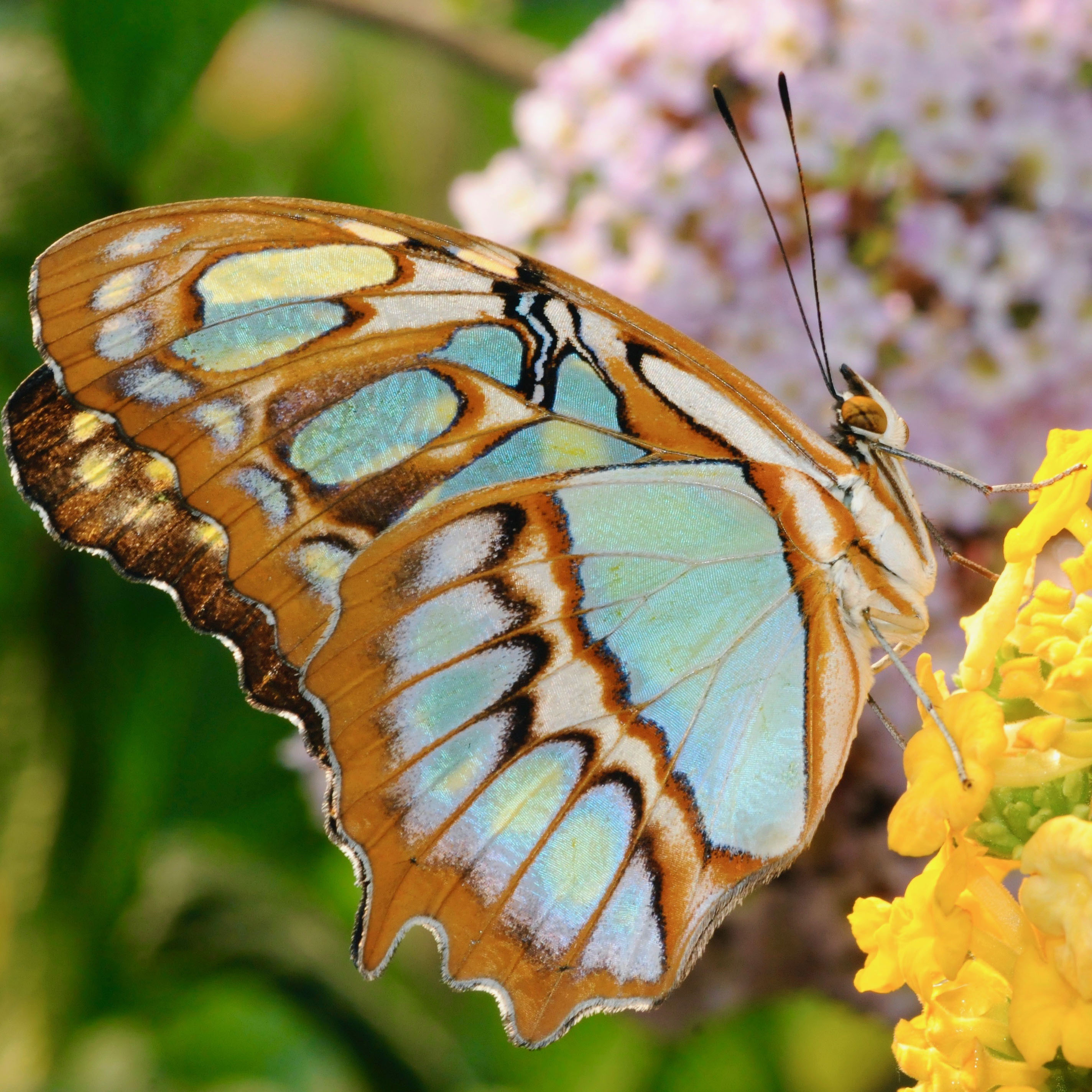
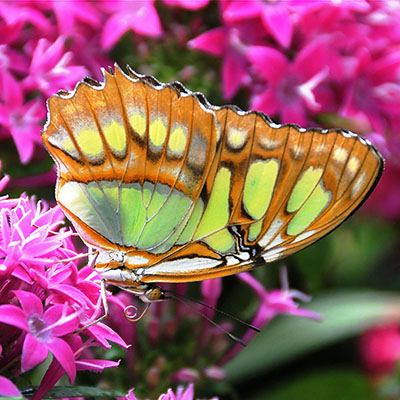
The beautiful scales pictured belong to the Malachite Butterfly (Siproeta stelenes)

Thank you to about.com for source

butterfly border

Mourning Cloak’s… A Joy to Behold!

The Mourning Cloak, Nymphalis antiopa, is one of the most common butterflies to be found in many regions throughout the world. There are several reasons why this handsome flier is so prevalent, but one of the most influential factors is that it uses a vareity of well known host plants, such as the Poplar, Cottonwood, Willow and Elm. These ardent trees are often wide spread and ample in supply, so it is no surprise that the butterfly, which depends on them, is also happily represented.

Mourning Cloak’s, like other Tortoiseshells and Anglewings, overwinter as adult’s and do not migrate. This, along with their ability to efficiently absorb heat into their dark scales, contributes to their having a longer season in which to frequent our skies. These hearty fliers are often among the very first butterflies to be seen in the spring and one of the last to disappear from sight in the fall.

Besides being conspicuous in their adult stage, Mourning Cloaks, are also known for their gregarious social behaviors as caterpillars. It is clear that they support the “There is Safety in Numbers” philosophy. Mourning Cloaks eggs are most always laid by the female in large groups and remain in this close knit formation throughout their larval stage. Birds and other predators are sure to be frightened off by a rowdy crowd of up to 50 or more spiky red and black caterpillars who may menacingly shake the branch in unison when threatened.

Only after having filled their voracious appetites, moving together, stripping one branch after another of its foliage, do the larva part ways. Trees appear to be raining caterpillars when the Mourning Cloaks begin to drop from them like parachuters. It seems as if these stealthy crawlers are fleeing the scene of a crime when they free fall unto the ground quickly seeking to distance themselves from their host plant. After taking the plunge, the caterpillars will journey alone until they find a safe place to pupate, metamorphose from chrysalis to butterfly, and be earth bound travelers no more.

Nymphalis antiopa is a delightful species which spreads it’s wings throughout  many countries, populating parts of Europe, Asia and the North American Continent. In England, this butterfly is known as the Camberwell Beauty, but worldwide is called by many other names such as Grand Surprise and White Petticoat.

In North America, due to its resemblance to a traditional cloak worn when one is “in mourning”, it has been given the title Mourning Cloak, but no matter where or by whom this reddish-brown, cream and blue beauty is spied, I think all can agree that she is a not at all sorrowful, but instead a true joy to behold.

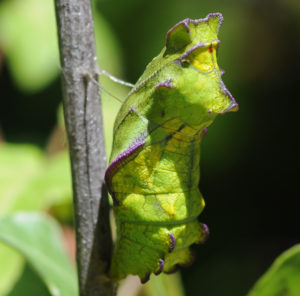
Mystery Chrysalis CONTEST…Can you guess what am I am?


If a predator were to look closely at you, they might see the outlines of your wings, antennae or abdomen. They might even see
that you are an immobile butterfly in the making.
Defenses are few for a strung up statue…

-K. D’Angelo (from Butterfly Dimension)

Be the first to correctly identify which species of butterfly this chrysalis will become and WIN a set of 4 assorted Butterfly Note Cards!
(Spots of Color shown above).  Each signed by Award Winning Artist, Lorac
. Visit our Butterfly Shop to view other card styles available.

To enter the contest, leave us a comment with your “best guess”.  You will find the “comments” link at the top of this blog post and good luck!

Contest Ended  Midnight, June 30, 2010

The answer to the Mystery Chrysalis is shown below…


I am a Pipevine Swallowtail (Battus philenor) Buttterfly…. One of Mother Nature’s many wonderful mysteries set aflutter.

What’s in a Name? The Euphydryas chalcedona Butterfly…

The Euphydryas chalcedona butterfly is also known as the Chalcedon Checkerspot, the Variable Checkerspot, the Anicia Checkerspot and the Colon Checkerspot… which butterfly is this anyway ???

Euphydrayas chalcedona

Most people use common names when referring to local butterflies, but each butterfly also has a scientific name assigned to it and thank goodness for that!

Silene california (Silene meaning - perennial with red or pink flowers).. aka California Indian Pink or California Scarlet Campion

Throughout the history of western science most documentary literature, with respect to the naming of a species, has been written in Latin. The practice of using Latin descriptions has continued over time so that scientists and others who speak different languages can communicate and understand that they are talking about the same species. Many plants and animals have common names which differ by regions and using universal names to identify a group avoids confusion among all.

The Latin title given to a particular species may be assigned for many different reasons. Some are named after characters found in Greek or Roman mythology, others are titled because of where they were found or who discovered them, and many receive their labels due to unique appearances or patterns of color.

Euphydrayas chalcedona... variable with a beautiful deep orange-red color

In the case of  the Euphydrayas chalcedona, we can learn by researching the origins of the word that the butterfly was named for it physical characteristics.

The name Chalcedon came from the Latin word, chalcdonius,which is derived out of the Greek term, khalkdn, meaning a mystical stone (Revelation 21:19). Both expressions are thought to have originated from the Phoenician word hadiic kapr, meaning “new town”.

Chalcedony is a quartz stone which has a waxy luster and may be translucent or semi-transparent. It is though to get its name from the ancient Greek town of Chalecdon. This

Red Chalcedony Quartz

mineral can assume a wide range of colors, including white, pale-blue, gray, brown or black. It can also be found in a lovely variegated deep orange-red color, hence, the naming of  the Euphydrayas chalcedona butterfly.

To learn more about the Latin names of butterflies… click the scholarly image below…

Butterfly Jungle at the San Diego Wild Animal Park

Upon a recent visit to the San Diego Wild Animal Park, I was reminded that Butterfly Houses often house more than just butterflies…

If you are looking to be dazzled by some of Mother Nature’s most colorful and gentle creatures, visit the Butterfly Jungle at the San Diego Wild Animal Park in Escondido, California (open seasonally). Upon entering the park’s main gates, expect greetings and salutations from a bright and cheerful welcoming committee.

As you make your way through the park, you will see that there are signs of butterflies everywhere.

Follow them to the exhibit, but make sure to say hello to some of the silly and sweet faces which may greet you along the way!

When you spot whimsical butterflies decorating the treetops you will know that you have arrived at the Wild Animal Park’s Butterfly Jungle.

As you wait in line under the shading trees, you can snack on some seasoned mealworms, if you dare! Hospitality and entertainment, compliments of the Wild Animal Park Staff.

Hopefully, feeling filled and content after tarrying along, you are finally ready to enter the Butterfly Jungle and view the awe-inspiring creatures you came to experience!

Oh… and don’t miss seeing the amazing butterflies which are on exhibit as well! ;-) ~Kristen

Click here to see a list of Butterfly Exhibits near you!