Category Archives: Butterfly Photography

Think Caterpillars Are Cute?

cutest-caterpillar-photo-contest

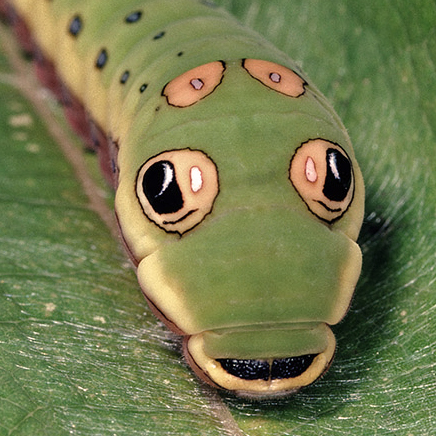
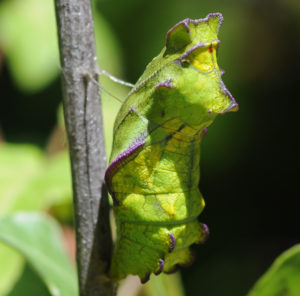
Cute Swallowtail Caterpillar

We think caterpillars are cute. . . If you do too, leave us a comment about our caterpillar and then vote for the cutest caterpillar in the OWB Flutter-Blog “Cutest Caterpillar Photo Contest“. Better yet, register to enter your favorite caterpillar photograph for a chance to win some great prizes!

Prizes will be awarded to the photographs with the most votes for 1st, 2nd and 3rd place!

The OWB Flutter-Blog Cutest Caterpillar Contest ends Saturday, December 3rd, 2011

How To Enter

  • Register to enter.
  • Post your favorite caterpillar photograph. (click on the post photos link)
  • Don’t forget to vote for your favorite caterpillar!
  • Share this link with your friends on Facebook or your favorite social network.
  • Follow Us on Twitter!

How to Win

  • Prizes will be awarded to the photos with the most votes, so be sure to tell your friends to vote! (You can only vote once)
  • Tweet up your cute caterpillar entry.
  • Share this contest post on Facebook.
  • Winners will be notified by email.
  • Winners will be posted on the OWB Flutter-Blog.

Rules:

  • Entries must be of a caterpillar and submitted by the original photographer.
  • Any image deemed inappropriate by Flutter-Blog admin will be removed.
  • Contest ends Saturday, December 3rd, 2011 at midnight PST (Pacific Standard Time).
  • No purchase necessary.
  • Sorry, the Cutest Caterpillar Photo Contest is open to U.S. residents only.

Prizes:

1st Place Prize: Aqua Lady Butterfly Bracelet (value $39.00)
Winged Inspirations Fine Butterfly Jewelry

Sponsored by Obsession With Butterflies

Aqua Lady Butterfly Bracelet from Winged Inspirations

1st PLACE Aqua Lady Butterfly Bracelet Sponsored by Obsession With Butterflies

2nd Place Prize: Painted Lady Butterfly Caterpillar Kit (value $19.00)
Live Butterflies For Release, Classroom Education, Children’s
Parties, Weddings, Butterfly Rearing Supplies
Sponsored by Chase N’ Butterflies

Painted Lady Butterfly Larvae Kit

2nd PLACE Butterfly Larvae Kit sponsored by Chase N' Butterflies

3rd Place Prize: Haven Brand Soil Conditioner Teas – Assorted 3 Pack (value $12.95)
All-natural, premium soil conditioner teas for the home gardener, landscaper and farmer. Haven Brand uses only the highest quality manures from livestock that are raised on permanent, native grass pastures at the Haven Family Ranch.
Sponsored by Haven Brand

Manure Tea

3rd PLACE Assorted 3 Pack Premium Soil Conditioner Teas sponsored by Haven Brand

Cutest Caterpillar Photo Contest


Think Caterpillars are cute? Well then, cast a vote for your favorite caterpillar photograph, or better yet, register and enter your own cute caterpillar photograph into the Cutest Caterpillar Photo Contest for a chance to win some great prizes!
Enter the Cutest Caterpillar Photo Contest by submitting your own original photograph of a cute caterpillar. Prizes for the 1st, 2nd and 3rd place winners!
Contest ends Saturday, December 3rd, 2011 at midnight

Post photos | Recently added | Most views | Top rated

Egg Laying… Not just for the Birds!

"Do you have time for bon bons?" Asked Mother Robin of the Butterfly.

Monarch Butterfly Egg

Giant Sulphur Butterfly Egg

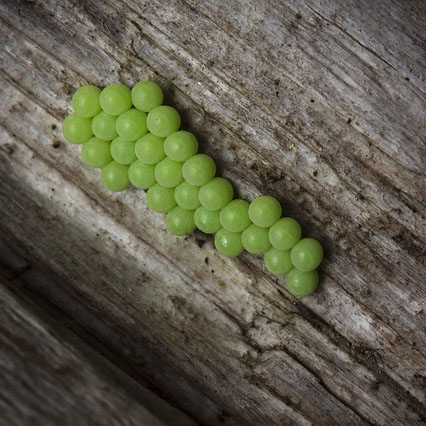
In nature, when it comes to motherhood and eggs, the female butterfly soars with the best of them. Although, she may not have to sit on her wee ones for 12-14 hours a day, as the Robin does, she will devote almost her entire existence to being an expert egg layer.

Butterfly eggs come in a wide variety of shapes, sizes and colors. Depending on the species of butterfly, the eggs could be rounded or pointy, they could be brown, white, pink, blue or green, they could be laid singularly, in twos or in groups of a hundred at a time. All these factors and many more come into play as the female butterfly chooses where and when to deposit her tiny specs of life.

Gulf Fritillary Butterfly Egg

Question Mark Butterfly Eggs

Green eggs go on green leaves, as camouflage is important to defend from predators. Pointy eggs may be laid in groups, because there is safety in numbers. The correct, safe and healthy, host plant must be found and on it the perfect leaf must be present or my babies may not survive. So much for eating bon bons or fluttering about without a care in the world!

In a brief and dangerous season of life, female butterflies have to work skillfully and quickly to ensure the survival of their species. Like many of the other mommies found in the natural world, their efforts are to be valued and are not just for the birds!

To learn more about Female Butterflies and their Eggs visit the OWB Dimension pages 

Others labor from sun to sun but a Mother's work in never done! ~ Unknown

A Butterfly Dream…


The Itsy Bitsy Spider…

BUTTERFLIES and their PREDATORS

The Itsy Bitsy Spider Crawled Up The Flower Stalk!

Graceful and non-aggressive, butterflies, at every stage of their development, from egg to caterpillar, caterpillar to chrysalis, chrysalis to adult, attract a wide variety of natural predators.

The list of butterfly foe is long and includes critters such as ants, frogs, lizards, birds, rats, snakes, parasitic flies, wasps and many species of carnivorous insects, like praying mantises, dragonflies and robber flies. Opportunistic and stealthy spiders can also be found hunting unsuspecting butterflies.

Brightly-colored markings, foul odors, bitter-tastes, false eye-spots and false identities are just some of the creative and dramatic defenses that butterflies have developed over time to protect themselves from their aggressors, but despite their efforts, butterflies still find themselves at the bottom of the food chain and at the top of the menu for many creatures who are hungry for survival.

To learn more about Butterflies and their Predators…

Visit OWB’s Butterfly Dimension Pages…


Breezes of Spring

Butterfly Poetry Breezes of Spring

Breezes of Spring

Sweet life is borne on Breezes of Spring
A tiny new bud, an egg left by wing…

Caterpillar and flower frolic happily together
With raindrops and rays amidst clement weather

Scarlet-gold leaves herald in changing light
Turning friends to chrysalis n’ seed at Nature’s delight

Creation finds rest in a white winter’s slumber
Silent snow cradles the awaiting season’s wonder

Out of the morning’s dew a yearning sprout does appear
Beholding a familiar winged dancer spying it’s tear

“Oh, bright little blossom, why do you cry?”
“Can you not see I’ve become a butterfly?”

Sweet life is borne on Breezes of Spring
A tiny new bud, an egg left by wing…

˜K. D’Angelo

Deerweed is not just for Deer…


Lotus scoparius, also commonly known as Deerweed,

is definitely not just for Deer!

In California, Arizona, and parts of Mexico, Deerweed sets the foothills ablaze in color from early spring through summer. This brightly hued perennial is a hot spot for local wildlife, butterflies included. Margaret Huffman of the North American Butterfly Association calls this lovely lotus “the best butterfly plant for Southern California”.

The Silvery Blue, Glaucopsyche lygdamus, Bramble Hairstreak, Callophrys perplexa, Funereal Duskywing, Erynnis funeralis and Avalon Scrub Hairstreak, Strymon avalona, all use this hardy plant as a host. Female Gray Hairstreaks, Strymon melinus, Orange Sulphurs , Colias eurytheme, Acmon Blues, Icaricia acmon, Marine Blues, Leptotes marina, and Chalcedon Checkerspots, Euphydryas chalcedona, are also rumored to have frequented its flames in search of a place to lay their eggs.

Changing in color from yellow to red once pollinated, Deerweed’s fiery buds attract many other pollinators as well, including the Yellow-faced Bumblebee, Bombus vosnesenskii. Rodents, birds and other seed eating creatures partake in its zestful foliage too. Male butterflies can often be found setting up territories near Deerweed. And not to worry; Deer, for whom this plant is not so aptly named, do not find themselves burned where foraging is concerned, as this hearty and drought tolerant native has ample to share.

Lotus scoparius is also known as Deervetch, California Broom and Western Bird’s-Foot Trefoil. It is a sub-shrub in the Pea Family and is commonly found in many areas including chaparral, coastal sand and at roadsides (elevations below 1500 m.). Ironically, despite its blazing appearance, Lotus scoparius is often used and planted for habitat restoration and erosion control after a brush fire. Plant Deerweed , Lotus scoparius, in you garden today and help butterflies and other native species to thrive. KD


Smoking Swallowtails? Dutchman’s Pipevine Butterflies gone wild…

Pipevine Swallowtail (Battus philenor) on Pink Saliva

A male pipevine swallowtail attempts to flirt with a female as she lays her eggs...

I recently visited a grove where the Pipevine Swallowtail’s host plant, the Dutchman’s Pipevine, grew vigorously. Here, in this shaded and otherwise peaceful wood, there was a state of butterfly pandemonium happening.

Male butterflies zealously chased female butterflies hoping to strike up a romance. The maternally driven ladies ignored the amorous males advances, and instead, tirelessly their laid eggs.


Female Pipevine Butterflies Laying Eggs

Other winged chaps spent their time attempting to defend their precious territories. Boldly these fellows chased their counterparts about the treetops, creating flashes of brilliant blue which rivaled the skies above. Stoic females continued to cooly oviposit, again, dismissing out of wing, the males showy displays.

The forest was a frenzy of flutter! Everywhere I stood I was bombarded by the scuttle of a wing. It was courtship chaos where no basking perch, nectar blossom nor host tendril was safe!

Are these Pipevine Swallowtail ingesting their host plant or smoking it?

The pipevine butterflies exhibited crazed mating and reproductive behaviors, as if they had all gone wild with passion. In no other species have I observed the sexes acting out their respective roles in such a fervent manner.

Made me wonder for a moment, if these swallowtail caterpillars had actually smoked, instead of ingested their host plant, the Dutchman’s Pipevine?

This hardy vine does, after all, as it’s name suggests, resemble a Dutchman’s pipe. When in bloom it flaunts, amongst it’s green-hearted foliage, oddly shaped flowers which form in an appearance similar to that of a dutchman’s pipe.

Dutchman's Pipevine (Aristolochia gigantea)

Male Pipevine on Purple Penstemon

Whatever the motivation, pipes or genetics, what was going on in the grove that day was nothing short of spectacular to behold for the butterfly enthusiast. Pipevine swallowtails are indeed vibrant and entertaining creatures at every stage of their development.

Years ago, when less exotic planting choices where available at local nurseries, people commonly grew Dutchman’s Pipevine in their gardens. Often they used it to cover and adorn porches, arbors and fences. Pipevine swallowtails could then be found more frequently in populated areas, even in urban neighborhoods.

To ensure the survival of this species be sure to plant Dutchman’s Pipevine somewhere in your yard. Keep Mother Nature’s show going! Support her dramatic and colorful productions. Then just sit back under your vine shaded porch, sway gently on your swing and enjoy the show… and your Pipe?… vine too! KD

Male Pipevine on Yellow Yarrow

Click the  Pipevine’s Wing below to learn more about this swallowtail…

Pipevine Swallowtail Wing