The Gulf Fritillary

Divine creation can be seen painted on the canvas of a butterflies wing…© Kristen D’Angelo
Artists, young and old alike, love to capture the beauty of butterflies.

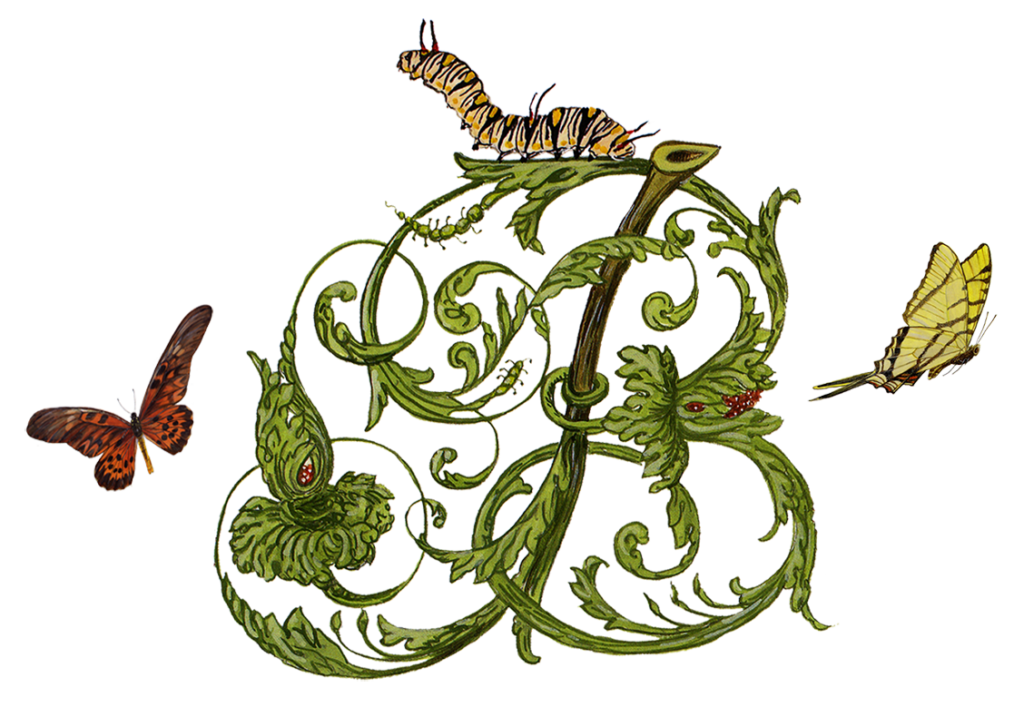
Above, Elena, age 8, illustrates the Gulf Fritillary (Agraulis vanillae) with it’s host plant Passion Vine (Passiflora). Can you spot the eggs, caterpillar and chrysalis hidden amongst the lovely purple flowers on the drawing?


Pale Swallowtail Butterfly Egg
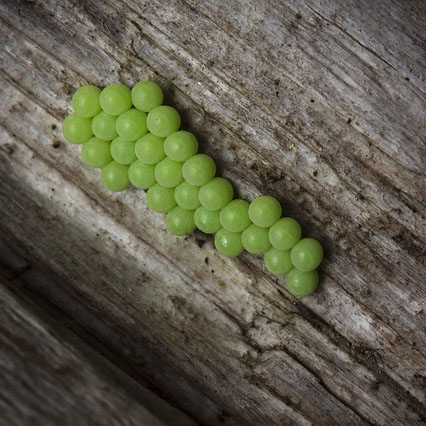
One of the 3 Pale Swallowtail eggs has darkened up and looks like it’s getting ready to hatch. The other two eggs are still clear, I suspect they are duds, but I will know for sure in a couple days.
The darkened egg hatches and out crawls. . .a tiny pale swallowtail caterpillar. First thing he does is eat his entire egg. I’ve set him up at a “makeshift salad bar” complete with the most tender green leaves of coffeberry, cherry, California lilac and, and of course the leaf that he was laid on, peach (which is NOT the preferred host plant for the pale swallowtail) . 


Pale Swallowtail Eggs
My friend Eva watched a Pale Swallowtail (Pterourus eurymedon) lay eggs on her Peach Tree (Prunus) today, then she gave me the eggs! I’m not sure all 3 eggs will hatch, but I will keep you posted on their progress and let you know what the caterpillars decides to eat.
The “preferred” host plants for the Pale Swallowtails are plants in the buckthorn fmaily, including Mountain Lilac, Mountain Balm, California Lilac (Ceanothus), Holly-Leaf Cherry (Prunus ilicifolia) and Coffeeberry (Rhamnus californicus) and Alders (Alnus). This will be only the 3rd time I’ve had the pleasure of raising Pale Swallowtails and would love to hear from someone who has sucsessfully raised Pale Swallowtail Butterflies.

Cabbage Whites
Cabbage White Family

Just one day old...aren't we cute!
The Cabbage White (Pieris rapae) is one of the most common travelers to frequent our skies. Due to its abundance this delicate white butterfly is often overlooked and sometimes even thought of as a pest. Carrying a non-native stamp upon wing, it was introduced into the North American continent from Europe in the early 19th century.
Cabbage, hence its name, nasturtium and cultivated mustards are among this species favorite hosts and because these, and other host plants, are widely available this opportunistic flier has thrived. Although the Cabbage White is often met with disdain, I am kind to this cheery and ambitious butterfly when it visits my garden. -K.D’Angelo

It's my birthday..a whole week old..so soft & fuzzy too!

Teenagers! Come on everyone goes through a gawky stage...

Look at me now... I can FLY!
When the sweet Sara Orangetip (Anthocharis sara) flutters by, you know that springtime has arrived in Southern California’s coastal communities.
I spent an afternoon watching for this citrus tipped beauty as I explored the chaparral which adorns the rolling hills above the city of San Clemente.

To my delight I found a couple of courting Orangetips. The female was more interested in the nectar laden Sea-Lavender (Limonium) than she was in flirting with the male and so he was rejected repeatedly. Poor fella!

Upon further study, I also noticed that this particular lady appeared to have the markings of the Desert Orangetip (Anthocharis centhura) and the male looked as though he were a Sara Orangetip (Anthocharis sara).

Had she drifted over with the currents from Santa Catalina, I wondered, as I stood upon the cliffs gazing at the petite isle silhouetted amongst the pacific skyline.

Had she left the solitude of her isolated colony there to search for her favorite host plant, some native mustard, Tansy perhaps? (Descurainia pinnata) If this is the case, and you’re a male Sara Orangetip looking for a mate, then it’s best to stay clear of out- of -towner’s I guess. -K.D’Angelo
A concerned mother plans for her children’s future! She lays her eggs diligently. Depending on the species she may lay them singularly or in a group. She may lay them on the underside of a leaf or in a crevasse. Most always she lays them on the most tender leaves. She may use the “simple eye” on her abdomen to lay on the tip of a twisted tendril.

A female butterfly is not a realtor, but she might as well be. Location is everything to her! Location, location, an investment in her species future…

… A minute spec of life is set upon a leaf, out crawls a miracle, a Butterfly to be – K. DAngelo
Just the size of a dash or a comma, this tiny Giant Swallowtail enters the world by eating its way out of it’s egg. Some caterpillars will continue to munch on their empty shell, which makes for a nutritious first meal!
With all major body parts intact from the onset, this miniature muncher is ready and able to do what it does best. Eat! A caterpillar is equipped with all it needs to be the “Voracious Eating Machine” that Mother Nature intended.
It is thought that caterpillars consume more vegetation than all other insects combined. In fact, a typical caterpillar gains over 3,000 times i’ts body weight. In human terms this would be like a 10 lb. baby becoming a 3,000 lb. adult. Read more about caterpillars, eggs, chrysalises and butterflies by entering the “Butterfly Dimension” on the Obsession With Butterflies web site.
I was fortunate to see a Pipevine Swallowtail laying her eggs on Pipevine at the “Pavilion of Wings” butterfly house. The butterfly house is located just outside the LA Natural History Museum in Los Angeles. Pavillion of Wings. Check the LA Natural History Museum for opening season dates and hours.