Monthly Archives: July 2009

Santa Barbara Botanical Garden

SB Botanical Garden

Santa Barbara Botanical Gardens

When traveling, no matter what my destination is, I always love to tour the local gardens, for where there are flowers, there are usually butterflies too. Last week I visited the coastal city of Santa Barbara, California. Nestled in the foothills above this charming & quaint town is a 78 acre native plant garden. Although, sadly, some of its grounds where singed by the Jesusita Fire last May, much of the main garden area was spared and is as beautiful as ever.

Northern White Skipper

A Northern White Skipper dances atop a bright Desert Marigold

western columbine

Western columbine blazes safely amidst the vibrant greenery of the gardens

juba skipper

A Juba Skipper delights in the lovely lavender blossoms flaunted by one of California's Native Verbenas

lily

Resting upon its leafy pad, a Yellow Water Lily (Nuphar advena) looks much like the sun floating in an emerald sky

A Mylitta Cresent Butterfly gently alights upon some feathered foliage...

flame skimmer

A Flamed Skimmer beams about like mischief upon wing

northern white skipper 2

Another Northern White Skipper flutters by brightening an already beautiful sunshiny day

A gentle ocean breeze sways sleepy treetops as the creek below softy whispers its mellow song. In the canopies overhead one can spy butterflies silently fluttering by. They are heading to a tranquil field beyond the forest, a meadow blooming with peace and beauty. Who could not enjoy such a place as this! Think I will most definitely have to visit the Santa Barbara Botanical Gardens again in the springtime. Looking forward to seeing all the new growth and re-growth it will bring. -K. D’Angelo

To learn more about the Santa Barbara Botanical Garden click the following link…

http://www.sbbg.org

History of The Endangered El Segundo Blue Butterfly

El Segundo Blue ButterflyIn 1927, a plane piloted by Charles Lindbergh and humorist Will Rogers landed on a dirt runway east of the El Segundo dunes.  The site was eventually chosen as the Los Angeles International Airport.

By the 1950′s a subdivision covered much of the El Segundo Blue habitat, right under the flight path of LAX airport.

In 1973, the president of the United States signed into law the Endangered Species Act (ESA), the world’s only legal prohibition against the extinction of other species, even those as small and localized as the El Segundo Blue butterfly.

In 1975, thanks to members of the conservation group, the Xerxes Society, Standard Oil Company agreed to fence off and manage their small portion of the El Segundo Blue habitat.  This was the first formal butterfly reserve in California.

In 1976, the El Segundo Blue (Euphilotes battoides allyni) was listed as protected under the Endangered Species Act.

In 1991 the Los Angeles City Council voted that two hundred acres of the dune system be permanently preserved.

El Segundo BlueThirty-three years after being classified an endangered species, the El Segundo Blue butterfly is flourishing once again on 200 acres of sand dunes near Los Angeles International Airport.

In 2009 the endangered El Segundo blue surprises scientists by rebounding and expanding its range in the South Bay.

The size of a thumbnail, the El Segundo Blue butterfly stays close to it’s host plant, Seacliff buckwheat (Eriogonum parvifolium), also called dune eriogonum or dune buckwheat.

Seacliff Buckwheat (Eriogonum parvifolium)Seacliff buckwheat is among the many buckwheat species we have in southern California.  Seacliff buckwheat is typically found on dunes and bluffs along the coastal communities from San Diego County up to Monterey County.  Like many other buckwheats, although its main blooming season is during the summer, some blooms may be observed at almost any time during the year ranging in color from a rosy pink to white and then to a deep coppery bronze when dry.

Plant some Seacliff Buckwheat in your garden today… More seacliff buckwheat would mean more El Segundo Blues!

Excerpts from one of my favorite books, An Obsession With Butterflies ~ Our Long Love Affair with a Singular Insect by Sharman Apt Russell
Photos and text excerpts the LA Times article “Reaching New Heights” July 30, 2009 ~ http://www.latimes.com
posted by Vickie

Have a little lepidopterist at home?

Do you have a little lepidopterist in training at home?  Nothing quite captures the awe of nature like the smile on a child’s face when they first begin to experience butterflies.

lepidopterist in training

Recipe for Sunshine…

Ever wondered how to make sunshine? Mother Nature knows how!

Below is “her” recipe for the Cloudless Sulphur Butterfly…


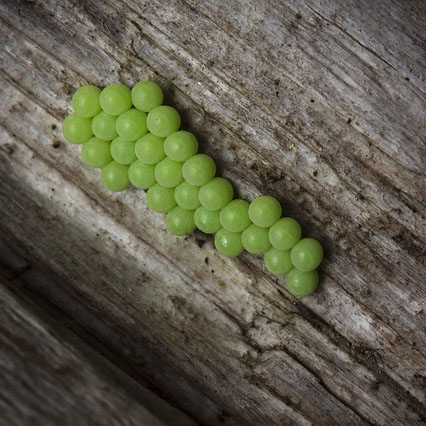
Start with an itsy bitsy egg. Set it on the tenderest bud of a Cassia senna plant until it turns the color of sunshine.

cloudless cat tiny

Then watch closely as the egg comes to life and a tiny bright caterpillar emerges.

Let the little yellow guy munch away at the Cassia senna plant for as long as he likes.

cloudless caterpillars

Notice how he grows bigger and then begins to flaunt the green hues of his host plant.

He leaves just a touch a of his sunshine showing through in his stripe.

Now spy him turn curiously into the letter J.

And magically mimic a lovely leaf.

Then Voila, Out comes the Sunshine…

Enjoy!

Cloudless Sulphur Butterfly (Phoebis sennae)

Camouflage is a game we all like to play!

Camouflage is a game we all like to play, but our secrets are as surely revealed by what we want to seem to be as by what we want to conceal. Russel Lynes


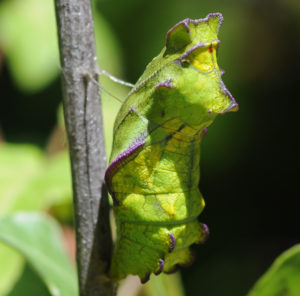
anise swallowtail chrysalises These two Anise Swallowtail chrysalises (Papilio zelicaon) express their individuality through color. Despite their being raised at the same time and under the same conditions, one chose to be green & yellow, while the other opted to become brownish black.

While in the chrysalis stage, butterflies, often attempt to visually mimic the hues of the surrounding foliage. Regardless of the colors chosen, one can certainly appreciate their efforts to camouflage themselves!

Wow! A Western Tiger Swallowtail egg!!!

After years of searching… I finally found a Western Tiger Swallowtail egg!

western egg on wing

All fellow “butterfly egg hunters” out there should understand why a celebration of sorts is in order! Butterfly eggs in general can be hard to come by, especially when you are at the mercy of Mother Nature, but the Western Tiger Swallowtail’s eggs seem to be particularly, well, quite literally, out of reach.

Sycamores, Willows and Cottonwoods, the Western Tiger Swallowtail’s ( Papilio rutulus ) host plants, are not only typically abundant in source, but also grow large in structure. This makes the prospect of obtainng a Western Tiger’s egg nothing short of finding a needle in a very, very big haystack.

western tiger swallowtail

Desperate Times Call For Desperate Measures!

Western Tiger Swallowtails are common in the rural areas of Southern California. Often they can be seen fluttering high near the canopies of their favorite host plants, especially native  California Sycamores ( Platanus racemosa ). Other than reverting to my childhood days of tree dwelling, I can think of no other way to seek out and acquire a Tiger Swallowtail’s egg. Once, while driving, I noticed a Sycamore that had recently been struck down and was laying along the roadside. Admittedly, crazily, I pulled over my car and looked over the trees foliage for eggs, but, much to my disappointment, found none.

I don’t know if  Lady Luck decided to have a chat with Mother Nature or not, but for whatever reason, last week she finally resolved to shine upon me. My good friend and fellow confessed “butterfly egg hunter” actually spied a Western Tiger female laying eggs near her home. Next thing I knew the ladder was in my car and then I was high up in branches of several lush Sycamore trees searching the leaves for eggs.

Like many butterflies, I sought to camouflage myself by wearing earthy hued colors, such as green and brown. I also kept an over-sized hat on, hoping no one would recognize me and might instead mistake me for some over zealous gardener. I searched in the canopies for sometime, then just as I was about to fold up my wobbly ladder and go home I found what I had been hunting for.

Wow!!!… Finally, a Western Tiger Swallowtail egg!!!! It was just sitting there topside, upon a sizable leaf, perfectly disguised amongst the spotted patterns typical of the Sycamore. I had always thought that female butterflies preferred to lay their eggs on the soft new growth of their host plant, but not in this case.

Here, mama clearly opted for the covert over cushy and also, possibly due to her size, choose to lay the egg at the base of a considerable leaf which could sustain her body weight. Whatever the circumstances, I was glad to have found the egg! I am hoping to watch the caterpillar which emerges from it go through full metamorphosis, but am most looking forward to seeing it fly off as a lovely swallowtail butterfly into the canopies from which it came. -K.D’Angelo

The Gulf Fritillary, a young artist’s view…

The Gulf Fritillary

gulf frit 2

Divine creation can be seen painted on the canvas of a butterflies wing…© Kristen D’Angelo

Artists, young and old alike, love to capture the beauty of butterflies.

 Gulf Frit Drawing

Above, Elena, age 8, illustrates the Gulf Fritillary (Agraulis vanillae) with it’s host plant Passion Vine (Passiflora). Can you spot the eggs, caterpillar and chrysalis hidden amongst the lovely purple flowers on the drawing?

blue passion vine

Learn more about the Gulf Fritillary Butterfly


Future Olympian…

Anise Swallowtail (Papilio zelicaon) Caterpillars love gymnastics too…

anise cat

Just look at this bridge… such form (excels in eating)… a future olympian to be sure!

anise cat 2

These flexible feeders bend over backwards for their preferred host plant, Fennel (Foeniculum vulgare), which is also known as Wild Anise.

anise swallowtail

Other hosts for the Anise Swallowtail include Parsley, Dill and Queen Anne’s Lace, all of which come from the Carrot or Umbel Family.